
Why Parents Shouldn’t Force Kids to Say “I’m Sorry”
Tags: communication, etiquette / manners, friendships, IQ / EQ / SQ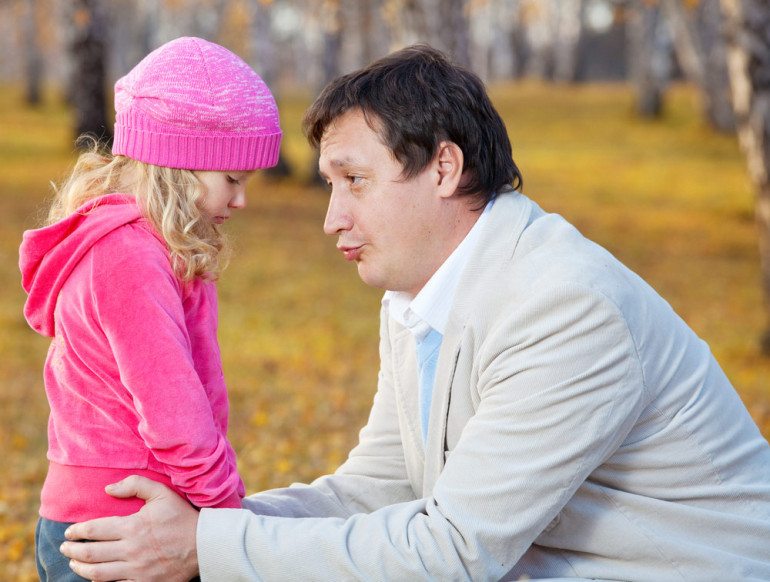
Parents find it shocking when I give the advice “don’t force your child to say “I’m sorry” after an incident. They think I am letting kids off the hook. Not true! Let me take a moment to clarify my reasons.
First, to be clear, I want your children to have good manners and develop a true sense of empathy and compassion for others. Yes, I want them to take responsibility for their actions and to make amends when someone has been wronged. All of those pursuits are important. I am only suggesting a different means and method to arrive at that end.
When parents simply force a child with the ole’ parenting chestnut “Come on now, say you’re sorry” they invite that classic nasal and sarcastic reply “ I’m saaaawry”.
Step into the child’s mindset and emotional state. You can imagine that any empathy that they were feeling because of their wrong doing, just flew out the window as their parents put the spot light on them and their screw up, which is now on public display. Embarrassing.
Next, you are commanded to apologize (as if you wouldn’t have capacity to do so of your own volition). Well, its humiliating and degrade, frankly.
Why They Do It:
The child’s use of a mocking tones serve to help them save face and keep a shred of dignity in the moment.
The child is saying with their behavior “I won’t be forced against my will. You can’t make me. You might be able to force me to say “I’m sorry”, but you can’t make me feel it – HA! I win! I defeat you!
Sadly, it becomes a war between parent and child, a total distraction from the actual task of learning from their mistake, helping the harmed party feel better and ultimately making amends for the incidents.
The child beings to feel angry at their parents and instead of owning the responsibility for their behavior they feel the other party actually got them in trouble with their parents, so they don’t feel empathy or remorse anymore. In fact, they now feel justified and not responsible!
What to do instead?
1) Modeling. If you are one to say “sorry” when you err, they will mimic you. Trust me on this one.
2) Pause. That’s right. Give kids a moment to volunteer a genuine response to a situation before you jump in two guns a’blazin’. You may well discover that your children do say they are sorry, if given a moment to compose themselves.
3) Focus on the future: Instead of forcing them to say sorry about the past, which they can’t change, put the focus their commitment to do something differently in the future. “Can you let your friend know that you won’t take his bike without asking again.”
4) Ask your child “what should happen now?” If they broke a neighbor’s window playing ball, letting the child think for themselves of how to right the situation helps build empathy, internalizes the lesson, and generates positive feelings about rectifying the situation. Replacing the window with their allowance and writing a letter stating it was an accident and promising to play in the park in the future feels restorative when they come up with the idea.


18 Responses to “Why Parents Shouldn’t Force Kids to Say “I’m Sorry””
Suzie
I actually searched out this topic because at one time I found it difficult, even as an adult, to apologize..and I wondered why. When we were married, my now ex used to comment that I was reluctant to apologize. He seemed almost delighted that he could find some occasion to point out that I had made a mistake, so that he deserved an apology. In contrast, he deeply resented when I was right – about anything. His phrase, “you’re always right,” was often repeated in a sarcastic tone when a decision of his (which I had cautioned against) resulted in negative consequences. After years of this response I began to withhold my opinion because, if it proved to be the wiser choice, his contempt was inevitiable. Strangely enough I had no problem apologizing to my children when they were young. I finally decided to divorce him when they were in their early teens.
Looking back, I had parents who thought it their social obligation to have children apologize for every faux pas. I was forced to apologize to my siblings and parents for every mis-step. As the strong-willed child in the family I was always in trouble and, therefore, the most frequently called upon to apologize. Sometimes my older sib set me up to take the blame for problems that she caused and I was compelled to apologize for what I knew she had done. Resentment for the humiliation of apologizing in front of another and anger toward my parents for demanding this act – whether or not it was sincere – are decades old memories that may have caused me to respond to adults, both in childhood and as an adult, as I did. No one seemed to care if I was sincerely sorry for my transgression or even if I was truly guilty. It seemed that the goal was to extract those two words, “I’m sorry,” from me – and nothing more.
With my own children I took a different approach. I would send them to their room to think about what had occured and then talk with them about what they had done and why they did it. The time lag gave me time to cool down andgave them time to ponder their behavior. One of the children was, like me, very strong willed and it became my goal to value and channel that character trait rather than try to break it. Today he is a young man of strong principles and determination with a good and kind heart, albeit a bit judgemental. 🙂
Lying was dealt with harshly – usually a spanking when they were young, but an admission of wrong-doing received a reduced discipline because I wanted to promote open discussion and honesty. It took me years as a parent to learn that there are no perfect parents and we often spend the rest of our lives getting over the first 20 years with our own parents….if we don’t forgive their mistakes (and ours) and move forward with life.
teaching children to say sorry…good idea? | Vancouver Children Photography - Baby Newborn Child
[…] are a number of articles written by experts regarding this issue. Here are 3 reasons why I don’t think it’s a good idea to teach my […]
Shari
I have a huge dilemma. My best friends 7 year old son insulted my 13 year old daughter. Sadly she reacted physically. No adults were present at the time and it was very he said she said. It got fairly ugly – my friends were very angry, my daughter cried all night. The next day she forced her son to apologize. I did not do the same. I do not believe in forced apologies and told her not to make her son do it as my daughter neither wanted to receive or give one at that time. She insisted and made him apologize. A week later she called me upset that I haven’t done same yet. I was trying to give my pre-teen space to get over it and think about it in a different light and maybe how things could have been handled differently. Turns out, she left a bruise on my friends son, which elevates it to a new level. She is now expecting an apology no matter what. I’ve asked my daughter if she feels remorse or thinks that she could have reacted differently, and have asked if she feels ready to apologize for her role in the incident. She is a good kid so i expected her to say yes and we could come up with a way to make amends. Much to my dismay – she has no regret, says she strongly dislikes the kid and my friend and could care less if she ever sees them again. Now I am in a difficult spot. My friend expects one fully and now I’m reduced to forcing my daughter which will be incredibly difficult and it will still not be sincere. She won’t even do it for my sake. Where do I go from here?
Robin
Don’t have her apologize for getting physical with the twerp. He probably deserved it and! Have her say: I’m sorry we had that incident the other day. I wish we could roll back the clock and have a do over. I’m sure we could have handled it differently. (This is more honest and she’s not having to say something that is meaningless. Usually this satisfies both parties involved.)
Julia
children still need to be taught by the parents even if it seems forceful that boy will look back and remember what his parents taught him. I believe it’s not bad to teach them to say sorry, If our kids don’t get use to saying sorry it it will be hard to say it when your older when you really are sorry. so parents who are teaching them are doing nothing wrong and parents whose child got hurt and the parent needs to teach their child the principle of forgiveness because that will help them to not be angry and love other people and not hate people for their choices whether bad or good and we are all not perfect are we Haven’t you heard the term practice makes perfect. I feel sorry for any parent who doesn’t teach their children because they will be parents one day and They will ask I wish my parents talked to me about the bad things I did and helped me but I had to learned the way you seem to think is better I know it is not. You learn in the home it start there.
Alegra
Hello, does anyone have any tips on this approach with a 2 year old??? I totally agree I want to teach empathy, not empty words, and yet it is so hard to “reason” with a 2 year old and help them understand the context. My little guy is actually on the calm end of toddler aggression, rarely hits/grabs/etc, but of course it happens. I am inclined to just say “Sometimes when we get excited we hit someone. When that happens we have to make sure they are ok. Let me show you how.” and then go to other child and say “Are you ok? I know I got a little excited and hit you. I didn’t mean to hurt you.” But even though I’m trying to teach, is that just me saying sorry on behalf of my child? Anyone have a better way to integrate the lesson into an action? I know he gets embarrassed and it just adds to the whole situation.
Sherri
I don’t believe in a forced “sorry”. I think that it teaches children to lie. Plus, they begin to believe that’s all it takes to fix a wrong doing. There are far too many adults out there like that.
Instead, with a younger child, I point out how the other child’s face appears, which is generally sad and teary. If there is a mark from their actions, I point that out. Then I get a cold cloth, and the child that did the hurting has to hold it on the other child’s wound until the other child feels better. They sit side by side until the injured party is ready to play. I emphasize that when we hurt someone it is our job to make them feel better whether it was an accident or not. I will suggest that the words, “I’m sorry” might help the other child feel better but the decision to use them is completely up to them.
I feel that this type of action is a natural consequence. With a two year old, it must take place immediately to be effective.
Catherine
Understand the article. Good points made. Just wondering if the same concepts apply to a 13 year old ??
Renee
It’s not about teaching them to be polite, its about teaching the other child to FORGIVE. I know a family where even when the child apologized to the parent, the parent has told them “Sorry isn’t good enough” Now, that child that is now grown is doing the same to their child. Since when is forgiveness not good enough?!?!?!!! You can teach empathy in other ways, but I on’y know one way to teach forgiveness.
Julia
wow that’s terrible I would never say sorry was not good enough to my kids that is harsh. I believe in siting down with my kids and asking them questions and i ask my boys what could they do to make their sibling happy again and they said say sorry which was not forcing them but helping them think for themselves. Every time my boys hurts his brother I remind my boys what it means to truly love family it takes time and many years but they will learn these principles of forgiveness, love honesty through practice.with others. I thought my example would be enough but it’s not always enough, you have to teach you children and talk to them one on one without being pushy and after they do something unkind and said sorry you tell them your proud of them for having courage for saying it to other boy you need to never give up teaching your child no matter what others say every child is different but we are all important.
How to NOT teach your child to say Thank you and I am sorry.
[…] I love articles that promote the idea that children shouldn’t be pushed into saying thank you or I am sorry, like this one. […]
Alyson Schafer
Yes! A 13 year old will be even more sensitive to anything they perceive as coercion or control. Instead, I would address how respectful we would like to treat one another in the family and make an agreement about ways to improve the current respect level in the family. I am sure the 13 year old has some ideas about how the adults could be more respectful towards him/her. Listen openly. Adults often are unaware of how they make breaches of respect. If you show genuine interest in their perspective and improving your own behaviour, the child will follow suite. Too often we expect the child to change first. Usually this doesn’t get the result we want.
Alyson Schafer
More and more we see the restorative justice model being used for bullying and I think the same can apply to any kind of altercation. The idea is to ask your daughter what needs to happen to make for closure – to own any part of the responsibility that is hers and make amends so all parties can move foreword. That can be in the form of a letter or an act of service ( repairing something that was broken for example). You’ve given me an idea for a new blog post – thank you! Till I get that written, I would try googling some resources.
Cori
When dealing with three year olds who get into altercations, I ask the offended party to explain how he or she feels. Then I ask the child who did the wrongdoing, “What can you do to make him/her feel better?” Sometimes, the answer is, “I can tell her I’m sorry.” Sometimes, the child shrugs (Indicating that an apology would not be sincere at this point). Sometimes, the answer is, “I can give him/her back whatever I stole.” Other times, the child decides to fix whatever toy or structure that they broke. When the child asks to give a hug to close the argument, I make sure they ask first. I do not give children options and make them pick one. They must choose by themselves. There are many ways to show that you’re sorry without having the words come from your mouth.
I agree that modeling is #1 in producing sincere apologies. I practice apologizing around the classroom when I forget to do things.
Sorry seems to be the hardest word | My Lucky Stars
[…] Don’t force kids to say I’m sorry on Alysonschafer.com […]
Julia
Cori your a great parent for teaching your kids that they will remember I’ve been step-mom for three years and my boys and daughter have it down better then three years ago and they’ve never been taught by their birth mother who has split personality and metal problems, so they never had rules when daddy was away providing so I had so much to do when I married my Jesse and became mom to three kids a husband with ADD and axcitey plus emotional trauma from e-wife, ladies you know building up mans self-esteem takes work and loving, he’s better now and healing I’m so proud of him but every now and then it come back but I have to be patient, We have two ten year old’s with disabilities and and one fourteen year old with ADHD today. So many challenges and yet our bond is stronger but talking one on one and the tone of voice is important to kids. I also found out how much kids use mommy and daddy and we fall for it lol every time. I had to figure that out over the year My kids lied all the first time even to their daddy. Now they don’t lie like they use it and there peace. I found out if you just say I’m disappointed that you threw a fit, I ask my boy are you happy and again get him thinking and then it’s more peaceful then putting him in time-out or spanking which doesn’t work or taking toys away doesn’t work ether. Talking to your kids is the best way for both you and your child. When I first started being a parents there was not book this is how you handler each of your kids lol nope I had learn through doing it and gaining my experience and it’s not easy for any parent today. Children are different and my kids are more emotional, I have to extra careful and patient, my home life know one spoke their feelings out load and punishments were never given. I remember to this day my bike I got for my birthday i loved and rode everyday. My brother took it apart and put the parts on his bike and my parents said nothing, i remember being upset and trying to talk to mom and dad but they did nothing. It took my along time to forgive my brother and mom and dad for what happened and for parents never asking me why i was upset and never talk to my brother about it. I now have children and if that happen I would have my son take the parts he took off and put it back on his sister bike and couldn’t ride his bike for a week or two. But giving up the bike wouldn’t really resolve that issue between them. I have only been remembering past memories for the past three years as a parent. Know parent are not perfect, I remember good things from my parents, my husband said his family was like mine too unemotional, but now with children that are always emotional 24 7 it is a struggle everyday. I love my kids so much and I know I can’t give up on them, I just can’t. and ether will there daddy.
Why I'm an Unapologetic Manners Nazi - The Daddy Files
[…] force manners on her kids or correct them when they forget. Bloggers like this one feel forcing your kids to say “I’m sorry” is bad, because it’s not authentic. Even some of my fellow friends and dad bloggers have […]
Fostering vs. Forcing: Elementary Apologies – Embracing Kindness
[…] Alyson Schafer offers a few solutions to the forced-apology problem, which I find pretty compelling: […]